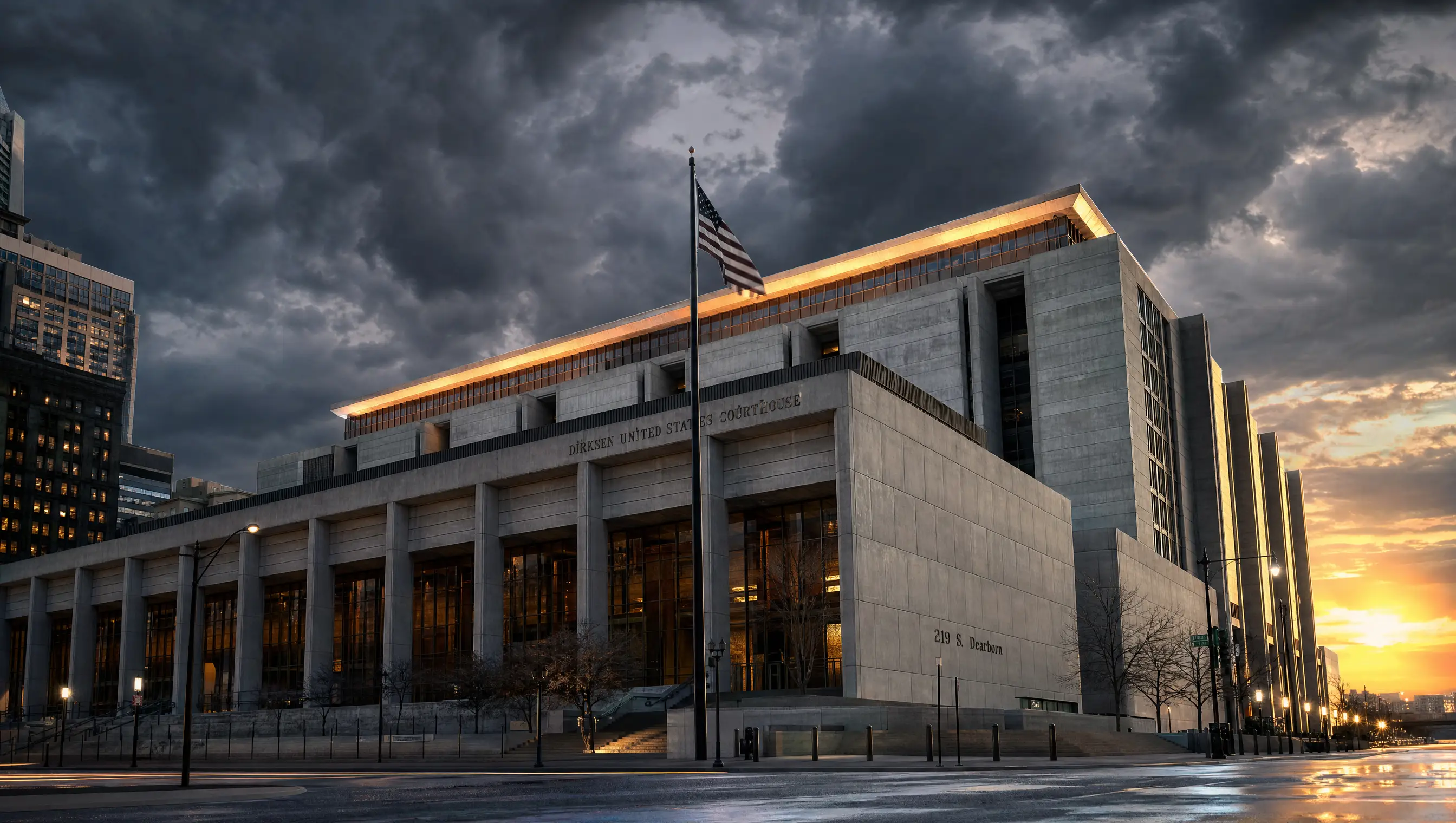
Identify the forum before drawing conclusions
The existing Adams Defense Law article explored federal prosecution in the Northern District of Illinois. This edition retains its focus on understanding the forum while replacing broad statistical claims with practical questions for the person facing an inquiry or charge.
Federal and state proceedings operate under different bodies of law. The seriousness of an accusation alone does not tell you which forum applies. Read the agency name and court heading on the documents, and ask counsel to identify the statutes and allegations that matter.
Understand the Northern District of Illinois
The U.S. Attorney’s Office for the Northern District of Illinois handles federal criminal prosecutions within the district. Its public information describes criminal work involving financial crimes, narcotics, firearms, public corruption, organized crime, and other areas. That describes an institution’s work, not the facts of an individual case.
For your inquiry, identify the division, case number if one exists, and the next court date. A matter may begin with agency contact before a charging document is filed. Explain whether you are responding to an investigation, a subpoena, or charges so the firm can frame the conversation appropriately.
Read the allegation and the procedural stage separately
A charging document identifies what the government alleges. A hearing notice or order identifies what may happen next and when. Both are useful, but they answer different questions. Organizing them separately can make an initial review more efficient.
Ask counsel what documents are missing, whether there are existing release conditions, and how communications should be handled. If you already have a lawyer, disclose that fact at the outset and explain the purpose of seeking another conversation.
Use statistics with care
A chart about a district’s past cases cannot predict the result of your case. Different datasets may count filed matters, defendants, convictions, pleas, or completed proceedings. Those measures are not interchangeable, and the year of the data matters.
Rather than using a percentage to assess your position, focus on the actual allegations, available evidence, procedural issues, and decisions approaching. Counsel can help identify what requires investigation and what can be assessed only after the record is reviewed.
Bring the right information to a consultation
Keep the full documents you received. Prepare a short list of relevant dates, the court or agency involved, and questions about communication, fees, and the proposed scope of representation. Ask how to deliver materials securely before sending a case file.
Adams Defense Law’s Chicago office is a point of contact for discussing availability. Arrange a meeting before visiting. An inquiry helps start a conversation; representation and its scope must be confirmed with the firm.
General information, not legal advice. Contacting the firm does not establish an attorney-client relationship.
All articles